Trowel Continued: Why I Picked Up the Project
Keeping a useful building tool available, learning through a real project, and taking responsibility for what comes next.
October 2, 2026 · 4 min read
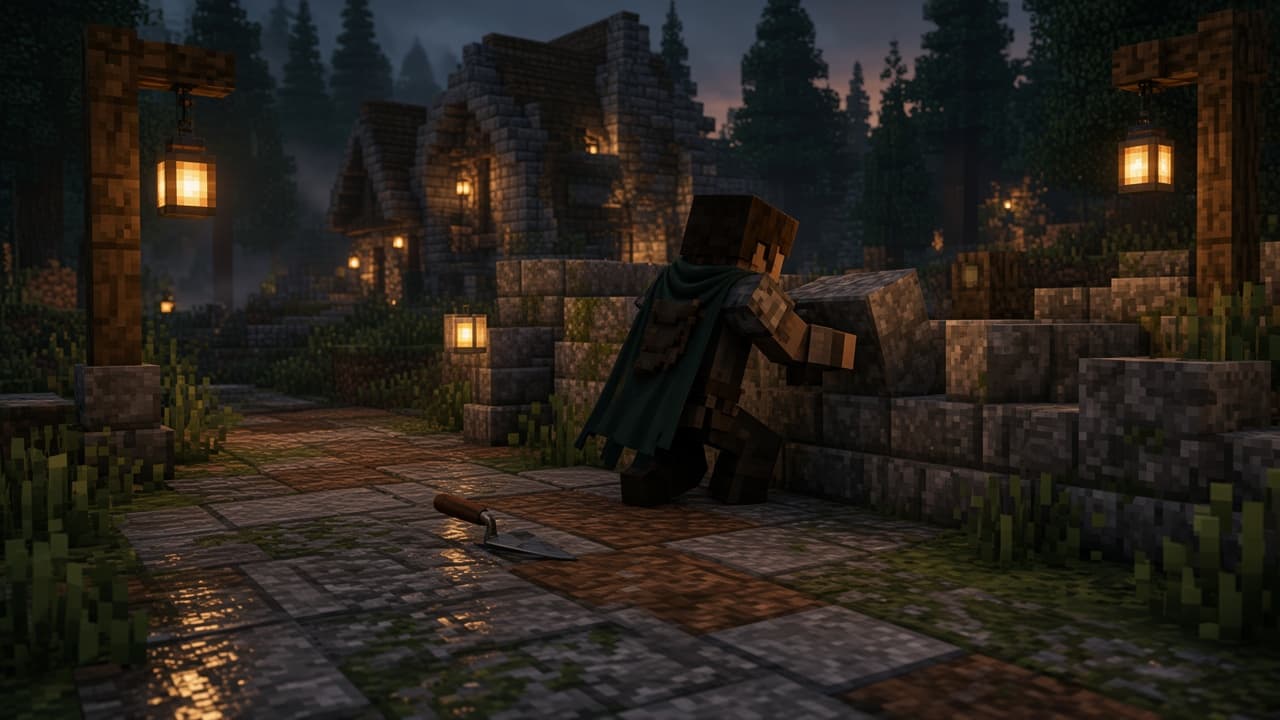
Trowel Continued started with a practical problem: there was a building tool I wanted to use on StoneHaven, but the original version hadn’t kept up with the Minecraft version we were running.
The original Trowel, created by TheEnderCore, had a simple idea that fit naturally into Minecraft. Put a selection of blocks in your hotbar, use the trowel, and let it randomly choose a compatible block to place. For paths, walls, and other builds that benefit from a mix of materials, that saves a lot of switching between hotbar slots.
I wanted to keep that tool available. That became the starting point for Trowel Continued—and an opportunity to learn what maintaining a Minecraft mod actually involves.
Why fork it?
Running StoneHaven puts me on the receiving end of Minecraft updates. When the server moves forward, the mods we use need to move with it. Sometimes that means waiting for an update. Sometimes it means finding an alternative. In this case, I decided to try doing the update myself.
The original project gave me an existing codebase to learn from and a clear behavior to preserve. I could see what the tool was supposed to do, which gave me a concrete way to judge whether my changes worked.
I initially worked on the port and opened a pull request upstream. Creating a separately maintained fork then gave me a place to manage my own releases and compatibility updates under a distinct name.
That distinction mattered to me. Trowel Continued builds on TheEnderCore’s work. The original attribution and MIT license remain part of the project, and the new name makes it clear that this is an unofficial continuation with its own maintenance.
More than changing a version number
The port moved the project from Minecraft 1.20.1 to 26.2, alongside a move from Java 17 to Java 25. It also meant updating the surrounding Fabric, Kotlin, and Gradle setup.
Those version changes were only part of the work. Item registration, placement behavior, resources, and project metadata all needed attention.
The important question was whether the trowel still behaved correctly in actual play. Could it select and place compatible blocks from the hotbar? Did Survival consume the right items? Did Creative behave appropriately? Did the item render correctly? Would it work on a dedicated multiplayer server as well as in singleplayer?
A successful build was one checkpoint. Using the tool in the game was another.
That was a useful lesson early in my modding experience: compatibility includes everything the player encounters after the game finishes loading.
Keeping the original purpose
One of my priorities was preserving the straightforward purpose of the mod.
The trowel already solved a specific building problem. Its usefulness came from how easily it fit into an ordinary building session: gather your materials, arrange your hotbar, and start placing blocks.
For this continuation, getting that experience working reliably was the main goal. Adding more features could wait until the foundation was sound and there was a clear reason for them.
Working within that scope also helped me learn. I had a manageable project with an observable result, and each change could be evaluated against the same basic question: does this help the tool do its job?
From a server need to a public release
The project began with something I wanted for StoneHaven, but publishing it made sense once the updated version was working. Other players and server owners could have the same need.
Preparing it for release meant looking beyond the code. The project needed its own identity, accurate dependency information, installation guidance, and documentation explaining its relationship to the original mod.
Trowel Continued was published and approved on Modrinth on July 24, 2026. That was a meaningful milestone for me: a project I had worked through as a beginner was available for other people to download and use.
It also changed how I thought about the project. A public release gives other people something they may build into their own Minecraft setup. Clear documentation and compatibility information become part of the work.
Why continue maintaining it?
I chose to continue Trowel because I still see value in the tool, and because taking care of a focused project is a useful way to grow as a developer.
Maintenance means revisiting decisions when Minecraft changes, investigating problems, and checking that familiar behavior still works. It also means being realistic about what has been tested and what still needs attention.
My goal is to keep the mod useful and understandable while preserving what made the original worth using.
Trowel Continued is one part of my move from configuring servers toward developing the tools they need. It started with a small frustration, gave me a practical reason to learn, and became something I could share with the wider community.
Credit for the original Trowel belongs to TheEnderCore. I’m glad to have the opportunity to carry that work forward.